Procedure

Colorectal Surgery

Colorectal surgery covers conditions of the colon, rectum and anus, as well as endoscopic procedures such as colonoscopy, polypectomy and haemorrhoid banding. Patients may need assessment for bleeding, changes in bowel habits, anal pain, or when screening identifies a concerning finding.
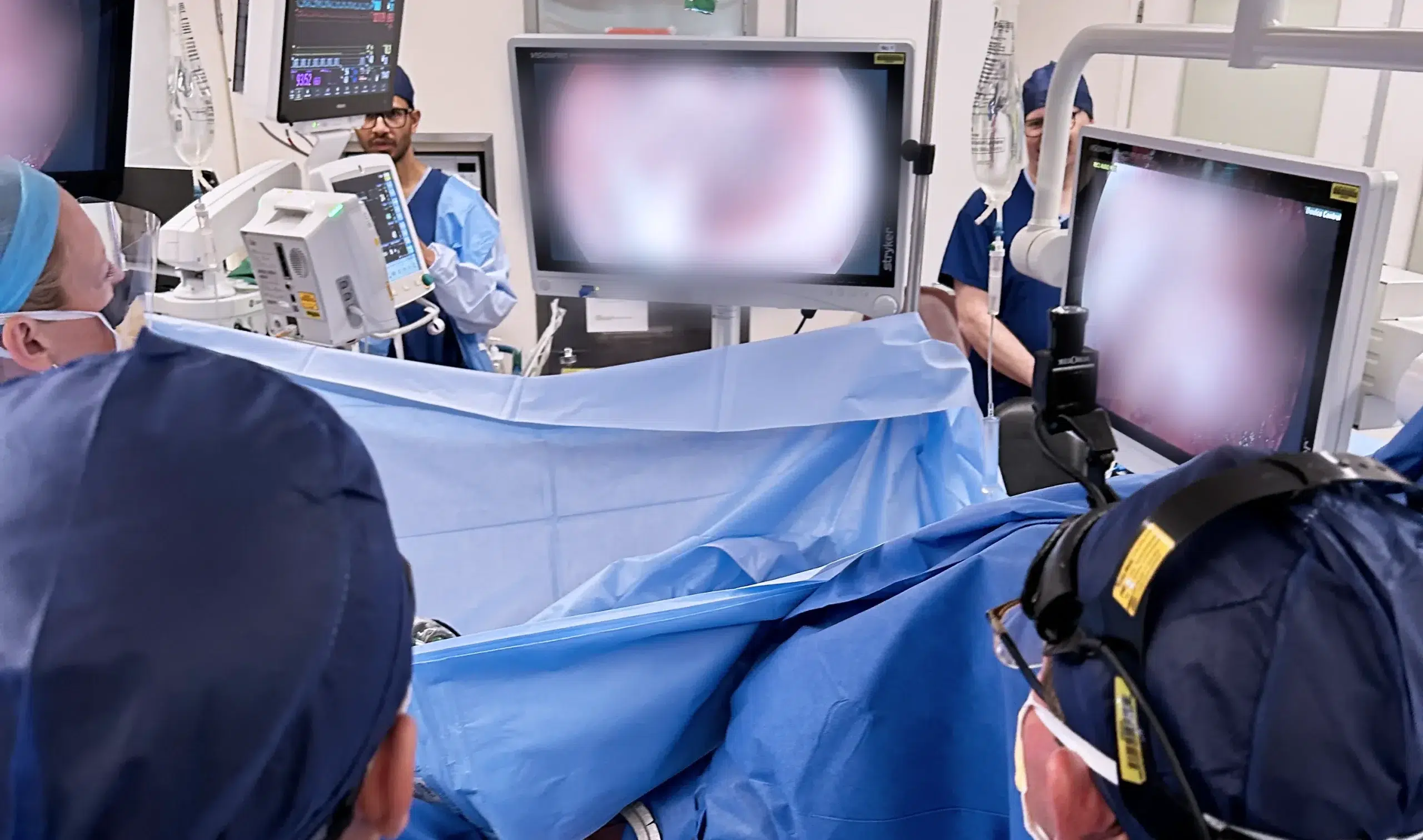
Surgeons operating in a high-tech theatre
What’s Involved
Your care begins once a referral is received and an initial consultation is arranged. At this appointment, Mr Jacob will take a detailed history, review any findings, and explain your condition in clear, understandable terms. You’ll have the opportunity to discuss options, ask questions and understand the next steps.
After your referral arrives, a consultation is organised to review your symptoms, history and examination findings. Mr Jacob will explain any confirmed or suspected diagnosis and outline his clinical reasoning in a calm, clear way.
If surgery is recommended, Mr Jacob will complete the consent process, ensuring you understand the procedure, benefits, risks and alternatives. You’ll then speak with his booking secretary, who will offer suitable surgery dates, discuss preparation, and provide MBS item numbers to check with your fund.

You will admit to your selected hospital — on the day or the day prior depending on your procedure. This applies to both endoscopic procedures and operative surgery. Mr Jacob and your anaesthetist will see you beforehand, review the plan and answer any final questions.
Your length of stay will depend on Mr Jacob’s recommendation and your individual recovery needs. Many endoscopic procedures are day-only. For surgical cases, the hospital team will assist with pain management, early mobility and monitoring, ensuring you’re safe and supported.
Before discharge, the hospital will schedule your post-operative or follow-up appointment with the clinic. You’ll receive guidance on wound care, activity levels and when to reach out — and you are always welcome to contact us if anything concerns you.
Our Approach

We focus on minimally invasive care, clear communication and personalised support to help patients feel confident throughout treatment.

  • Minimally invasive options wherever appropriate
  • Clear explanations to reduce uncertainty
  • Patient-centred decision-making
  • Evidence-based techniques
  • Supportive follow-up for continuity
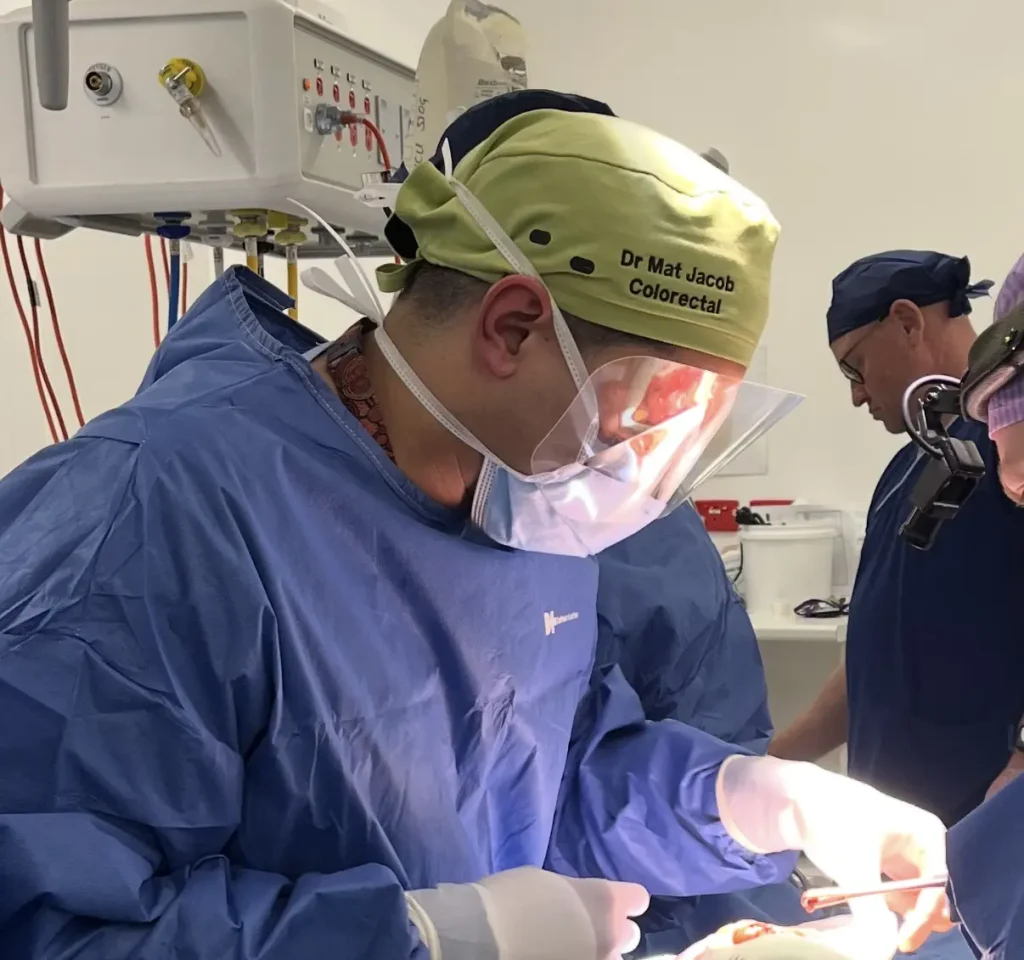
Surgeons performing surgery in operating theatre.

Colorectal Surgery Conditions

Bowel Cancer

Bowel cancer occurs when abnormal cells develop in the colon or rectum, often starting as a small polyp. Screening frequently detects it early, and understanding the diagnosis helps patients feel more at ease as they move into treatment with Mr Mathew Jacob.

Inflammatory Bowel Disease (IBD)

IBD includes Crohn’s disease and ulcerative colitis, conditions that cause long-term inflammation in the digestive tract. Symptoms vary widely, and many patients need ongoing review. Mr Mathew Jacob provides specialist assessment where surgical guidance is required and works closely with gastrointestinal physicians to ensure the favourable outcomes for his patients.

Rectal Prolapse and Obstructive Defecation

Bowel Obstruction

Bowel obstruction occurs when there is a partial or complete blockage of the small or large intestine, preventing the normal passage of food, fluid and gas. It can develop suddenly (acute obstruction) or gradually over time.

Management Of Stomal Conditions

Stomal conditions include issues such as skin irritation, leakage, prolapse or retraction around a stoma. These concerns are common and manageable, and assessment with Mr Mathew Jacob helps identify the cause and provide effective, personalised care.

Perianal Pathology

Haemorrhoids

Haemorrhoids are swollen veins around the anus or rectum that can cause bleeding, discomfort or a lump with bowel movements. They are common and treatable, and many patients feel reassured once they discuss their symptoms with Mr Mathew Jacob.

Anal Fissure

An anal fissure is a small tear in the lining of the anus, causing sharp pain and bleeding with bowel movements. It is common and often improves with simple treatment, though persistent cases benefit from specialist review with Mr Mathew Jacob.

Pilonidal Disease

Bowel Related Endometriosis